Hacking means you are in deep into research and to understand that you have gain access to that system or technology in order to get knowledge or to create something new out of that. It is your state of mind, that you use it for legal or illegal purpose.
This Blog is brief and specific information about all "Cyber World" concepts and news.That is why domain name is www.thehackernews.in
- Normalization process concerns with the transformation of the
conceptual schema (logical data structure) into computer representable form.
- It is a process of restricting data into tables; in order to
ensure efficient & reliable storage & smooth retrieval of data.
Database Schema
A database schema of a database system is its structure
described in a formal language supported by DBMS
Formal Language
Finite set of strings, symbols or tokens that defines a DBMS
Thus, schemas are the set of formula/rules that specify the
integrity constraints imposed on Database.
Need Of Normalization
As time passes, there will be need for most databases to grow
by adding new attributes and new relations. The data will be used in new ways.
Tuples will be added & deleted.
Information stored will go updation also. New associations
may also be added. In these suitations, the performance of the DB is dependent
upon its design. A bad database design may lead to certain undesirable things
like:
- Repetition of Information
- Inability to report certain information
- Loss of Info.
All this may lead to rewriting of application. Thus
Normalization, helps to attain database design & ensures the efficiency of
database
Advantages of Normalization
- Reduces data redundancies
- It helps in eliminating data anomalies
- It produces controlled redundancies to link tables
Database Integrity
DB contained, data employed by many users. It is important
that the data item & associated relation b/w them not to be destroyed.
The DBMS designed, includes some certain types of checks that
ensures that the data entered in the table conforms to certain rules which in
terms does not violates the original data structure of DB.
Eg. No. of days an emp. Worked in a month can’t exceed the
no. of days in a month.
First Normal Form (1NF)
A relation is in 1NF if and only if all underlying domains of each relation contain atomic(indivisible) values, and the value of each attribute contains only a
single value from that domain.
A
row of data cannot contain repeating group of data i.e each column must have a
unique value. Each row of data must have a unique identifier i.ePrimary
key. For example consider a table which is not in
First normal form
All Key Attributes defined
No repeating groups in table
All attributes dependent on Primary Key
Second Normal Form (2NF)
Functional Dependence
In a given table, an attribute Y is said to have a functional
depends on a set of attributes X(X->Y)
If and only if(iif)
Each X value is associated with precisely one Y value
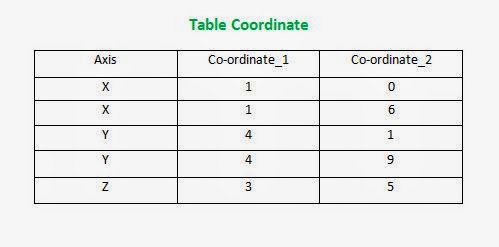
Here, is a Realation(Table), R (Coordinate) R{Axis, Co-ordinate_1, Co-ordinate_2} are its attributes (Co-ordinate_1) ------> (Axis) => Co-ordinate_1 is functionally dependent on Axis (Co-ordinate_2) ------> (Axis) => Co-ordinate_2 is functionally dependent on Axis
(Co-ordinate_1) non-dependent on (Co-ordinate_2) Partial Dependency refers to the dependency of a non-key (not assigned key constraints) on the portion of the composite-primary-key and not the whole primary key.
Hence,
A relation R is in 2NF if and only if (iif) it is in 1NF and every non-key attribute is fully dependent on the primary key.
NEW DELHI: Engineering graduates from India will find it easier to take
advantage of international prospects as their degrees will now be recognized across 17 major countries including the United States, Japan
and Australia. On Friday, India became a permanent member of the
Washington Accord, an international agreement for accrediting
undergraduate engineering degree programs.
International mobility of engineering graduates from Indian Institutes
of Technology (IITs) has not been an issue given the global recognition
of these institutes, but this has not been the case with the graduates
from the 1,300-odd other engineering colleges in the country.
With India becoming a permanent member of the Washington Accord, Indian
engineering graduates will be considered to have met the academic
requirements necessary to take up the practice of engineering in any of
the signatory countries. The Washington Accord
aims to promote mobility and quality assurance across countries.
Besides recognition for Indian engineering degrees, membership of the
international accreditation agreement will ensure a minimum global
quality for all engineering institutions in the country.
Congratulating the officials of the human resource development ministry and the National Board of Accreditation (NBA), human resource development ministerSmriti Irani
said, "This will ensure highest quality assurance standards to be
implemented in our technical and engineering programmes and provide
global mobility to our engineering graduates. Graduates having degrees,
which have been so accredited, would have substantial international
equivalence of their achievement levels across the signatory nations.
This will substantially enhance their employment opportunities around
the world."
The decision to give India permanent membership,
seven years after it acquired provisional membership, was taken at the
meeting of the International Engineering Alliance in Wellington, New Zealand, on Friday. The membership is effective immediately.
This brings to a close India's 15-year quest for permanent membership. In 2000, the All India Council for Technical Education (the NBA was part of the council) initiated efforts for membership of the Washington Accord but no real progress was made.
Another attempt was made in 2003, even though India's proposal was
considered fit for appraisal in June 2003, delays by the government in
pursuing the case meant that India missed out being considered at the
2005 meeting of the Washington Accord members.
Despite efforts in fits and starts, India's serious quest for membership began with a push from former HRD ministerKapil Sibal
through moves including granting of autonomous status to the NBA. The
Washington Accord requires countries to have a mandatory national
accreditation system. In September 2013, the IITs agreed to be brought
under the NBA's accreditation umbrella, a move that helped India's case
enormously.
There is little doubt that the billions of cars around the world are having an impact on the environment. This can only get worse as time passes, however are we take a look at 5 cool concepts forfuturistic travelto help cut down on the amount of cars on the road and to make it easier to get from point A to point B in the future.
The Superbus Project
[Image Courtesy of En-Derin]
Let’s face it buses have a long way to go if they are to look cool and they are always running late. The Superbus Project was designed to be cool looking along with offering luxurytraveland travel on demand, what’s better is that it would be a more eco-friendly form of masstransit. The Superbus has a design that takes on the appearance of a fancy stretch limousine and has16winged doors that rise up. The Superbus would have lots of safety features implemented and could travel up to155mph. The best part about this concept is that you would not have to wait around at a bus stop and it wouldn’t run to a time and be late, as you could send a text message or web message and it would pick you up at your doorstep.
The SARTRE
[Image Courtesy of En-Derin]
Freeway convoys are another concept and there is an EU funded project with the name of SARTRE that allows people to use their own cars while at the same time giving them free time on the commute to work. This works by there being a lead vehicle and all other cars, called the road train, following on in a line. The lead car would be professionally driven and this car would be designed to take control of all cars behind it. It would take control and release them based on signals given by the individual drivers of the road train cars. When the cars are in the convoy the drivers don’t have to steer or apply brakes or the accelerator, they can sit back and relax.
The Schweeb concept
[Image Courtesy of En-Derin]
There are some people who have taken to riding bikes on their commute to work, instead of their cars. This concept takes bike riding a step further, it is called the Schweeb. It consists of pods that the passenger sits in and pedals, which are attached to rails above the pods. Pods can be joined to allow families to travel together and it would offer zero-emission travel along with getting you fit at the same time. It would be ok for small trips, but longer ones would be exhausting.
The Elevated Bus
[Image Courtesy of En-Derin]
The Elevated Bus concept could put an end to congestion on the streets. Passengers on the bus sit up on the top deck, while the bottom deck remains open and vehicles are able to drive right through it. This means that traffic is not brought to a standstill when passengers get off the bus and the bus would run on rails and be able to hold1400passengers.
The Moving Platforms Concept
[Image Courtesy of En-Derin]
While high speed trains are fast they do have the downside of them having to slow down and stop at stations and then pick up their speed again. This is where the Moving Platforms concept comes into its own. With this concept there is a high speed train that doesn’t have to stop as there is a train dock which travels at the same speed as the train and docks with the moving train. Passengers then get off the main train and onto the docking train, while moving, which can then stop at stations, while the main train continues without having to slow down.
The world’s biggest and most elaborate shopping mall has to be theDubai Mall, in Dubai (obviously) and it is situated at the foot of thetallest buildingin the world, theBurj Khalifa. The mall is home to more than1,200 storesand cost more than$20 billionto construct.
[Image Courtesy of DubaiMall]
The shopping mall is four times the size of theWestfield Centre in Londonand it opened in2007after the opening had to be delayed twice. When it opened it had600 retailers, making it the largest commercial project along with thebiggest evermall opening in retail history. The shopping mall spreads out over12 millionsquare feet, which is about the equivalent of50football stadiums.
[Image Courtesy of DubaiMall]
In total there is more than5.9 millionsquare feet of floor areas. The car park is almost the same size as the shopping mall and holds a capacity of16 000 cars. Each and every year the Dubai shopping mall sees around26 millionpeople walk through its doors.
[Image Courtesy of DubaiMall]
The Dubai shopping mall is home to more than just the1,200shops, one of the biggest attractions to the mall is the Dubai Aquarium. This also happens to be one of the largest aquariums in the world at a size of51m x 20m x 11mand has one of the biggest viewing panels offering a view into the aquarium. The aquarium is home to more than33,000animals over85different species and400rays and sharks. Visitors to the shopping mall can see a ‘Living Ocean’ and the ‘Rocky Shore’ and meet a penguin colony, otters, piranha fish and catfish.
[Image Courtesy of DubaiMall]
The Dubai aquarium also has a270degree walkthrough tunnel made of glass for close up views of the aquarium. The aquarium comes with a lunar cycle lighting system which means that the whole ambiance of the tank is changed and this depends on the time of the day.
On level two of the Dubai Mall is the Reel Cinemas Movie Megaplex and this is one of the largest movie theatres in the whole of the UAE as it is home to22cinemas, which play the latest movies. It is also the very first movie theatre to have one cinema that is totally devoted to Charlie Chaplin and Orson Welles movies.
[Image Courtesy of DubaiMall]
The Dubai shopping mall is also the place to experience the Dubai Fountain which is on the30 acreBurj Kalifa Lake. The fountain sends jets of water as high at500 feetinto the air, this is around the same size as a50 storeybuilding. The fountain is an amazing 900 feet in length and is comprised of five circles, with each having their own sizes, along with two arcs in the middle. The Fountain performs each day to music and a light show.
Caleb
Turon (left) and Matthew Hewlett hacked a Bank of Montreal ATM and then
alerted bank staff to the vulnerability of the ATM. The 14 year olds
were late returning to school from lunch, but had a note from the bank
indicating they were helping with security. (Chris Procaylo/Winnipeg
Sun/QMI Agency)
WINNIPEG -- A couple of 14-year-old computer whizzes have the Bank
of Montreal upgrading its security after the teens hacked an ATM
machine.
Matthew Hewlett and Caleb Turon, both Grade 9 students, found an old
ATM operators manual online that showed how to get into the machine's
operator mode.
On Wednesday over their lunch hour, they went to the BMO's ATM at the
Safeway on Grant Avenue to see if they could get into the system.
"We thought it would be fun to try it, but we were not expecting it
to work," Hewlett said. "When it did, it asked for a password."
Hewlett and Turon were even more shocked when their first random
guess at the six-digit password worked. They used a common default
password. The boys then immediately went to the BMO Charleswood Centre
branch on Grant Avenue to notify them.
When they told staff about a security problem with an ATM, they assumed one of their PIN numbers had been stolen, Hewlett said.
"I said, 'No, no, no. We hacked your ATM. We got into the operator
mode'," Hewlett said. "He said that wasn't really possible and we don't
have any proof that we did it.
"I asked them, 'Is it alright for us to get proof?'
"He said, 'Yeah, sure, but you'll never be able to get anything out of it.'
"So we both went back to the ATM and I got into the operator mode
again. Then I started printing off documentation like how much money is currently in the machine, how many withdrawals have happened that day, how much it's made off surcharges.
"Then I found a way to change the surcharge amount, so I changed the surcharge amount to one cent."
As further proof, Hewlett playfully changed the ATM's greeting from
"Welcome to the BMO ATM" to "Go away. This ATM has been hacked."
They returned to BMO with six printed documents. This time, staff took them seriously.
"They brought the branch manager out to talk to us," he said. "He was
quite concerned and said he would have to contact head security."
Hewlett and Turon had a concern of their own -- they were late for
school. So Turon asked for a note on BMO letterhead explaining their
tardiness. His request was granted by the bank's financial services co-ordinator.
"Please excuse Mr. Caleb Turon and Matthew Hewlett for being late
during their lunch hour due to assisting BMO with security," the note
began.
Not surprisingly, the note raised eyebrows when it was presented at the school.
"The secretary read it over and asked, 'What kind of security were you assisting them with?'" Hewlett said.
In an e-mail statement Friday, Ralph Marranca, BMO's director of
media relations, said they were aware of the incident and have taken
steps to block unauthorized access.
"Customer information and accounts and the contents of the ATM were never at risk and are secure," he said.
Matthew's father, Brad Hewlett, said he and his wife are proud of
their son's remarkable skills, but sometimes they have to act as his
moral compass. Matthew has endured serious health issues since an early
age and had a double liver transplant three years ago, but it hasn't
slowed him down, Brad said.
"He's self-taught and into more than just computers -- it's physics and chemistry, everything," he said.
"He presented at the University of Manitoba last year for a program
that he wrote that sort of goes down the path for artificial
intelligence. The first two people judging didn't have a clue what he
was talking about. The third was a software engineer and the question
she kept asking was, 'Did you get any help with this?'
What happens when the wife of an army vet so tragically becomes paralysed? The Tank-Wheelchair! Army veteran, Brad Soden came up with the idea after his wife became paralysed from the waist down in 1999. He promised his wife he would build her something after she said the words, “Go on without me“, but after “two years and a bunch of beers” he manufactured the Tankchair in his garage, after many engineers told him it just wasn’t possible.
[Image Courtesy of Brad Soden]
The Tankchair is equipped with 12 and a half inch wide heavy duty treads that allow for movement across all terrains, allowing his wife to still look after their farm. “Muddy field, cross it. You want to go fishing with your buddies, go fishing. If it snows, cross the snow,” says Soden, who wanted to create a chair that could tackle all terrains and obstacles.
Soden has no engineering background and didn’t even go to college but years of hard grafting and putting in hard work to research and development he finally came up with his solution to let the disabled live their lives as fully as they used to.
Tankchairs start at$19,500 and come customised to customer specifications, things such as reclined back support or increased braking ability. “Money doesn’t drive me, it’s all about the smiles on the families and those we helped.” And he sticks to his word, all the revenue from chair sales goes straight back into research and development for future improvements on the chair.
[Image Courtesy of Brad Soden]
The frame is made from either steel or aluminium depending on application and is built to last 15-20 years. The two battery powered motors mean the chair can plough up a snowy hill with no problems. Muddy terrain is a breeze to the chair.
“I’m not a big rah-rah type of guy,“ he said in the video. “I get more pleasure watching other people have fun. You see a kid smile, or you see happiness, and the tears of it … I can’t really describe it. Man, I can’t tell you. It’s just really cool.”
Apple’s 7-for-1 split went live today, and its share price dipped under the $100 mark, as the technology company greatly increased its share count.
The market is up today, but Apple has picked up more than twice the
bounce that the NASDAQ has received, climbing north of 1 percent. It’s
not a massive rally, but no one anticipated more. Apple’s split is
noteworthy given its massive scale; the company is the most valuable
public one in the world, with a market capitalization of around $565
billion. So, Apple’s 1 percent lift today is worth north of $5 billion.
Staggering figures aside, Apple’s share price is now a modest $93.70,
making it a prime target for inclusion in the Dow Jones Industrial
Average (DJIA), a price-weighted exchange. Previously, Apple’s share
price made it all but impossible to include given the
exchange’s weighting procedure. Call it the Berkshire problem, if you
will.
If Apple was selected to be part of the DJIA, it could see its shares
pick up momentum as funds tracking that index pick up its stock. That’s
speculative, and merely potential of course.
Apple’s publicly stated reason for the split was to make its shares more accessible to a wider investment class.
Though the US Central Intelligence Agency may use
Facebook, Twitter, and the like to keep tabs on targets of interest, the
spy agency has only now officially joined social media--a move hastened
by an imposter who was using the agency's name online.
The agency’s first tweet, which earned the CIA nearly 200,000
Twitter followers in just a few hours, was the appropriately
sarcastic, “We can neither confirm nor deny that this is our
first tweet.” There were already 40,000 followers after just
a single hour online, with the agency's debut on Facebook
sparking a similar conversation on that platform.
“By expanding to these platforms, CIA will be able to more
directly engage with the public and provide information on the
CIA's mission, history, and other developments,” CIA
Director John Brennan said in a press release Friday. “We
have important insights to share, and we want to make sure that
unclassified information about the agency is more accessible to
the American public that we serve, consistent with our national
security mission.”
The CIA admitted as far back as 2011 that its agents and
employees regularly scan social media to spy on intelligence
targets. It already had multiple accounts on Flickr and YouTube,
but only debuted on Twitter Friday because it had spent months
lobbying Twitter to stop someone else who was already using the
@CIA handle.
“There was someone out there impersonating CIA via
Twitter,” spokesperson K. Jordan Caldwell told NBC. “Earlier this year, CIA filed an
impersonation complaint with Twitter and they secured the @CIA
account for us, which is routine for government agencies. This
has been a lengthy process. It's been in the works for a long
time.”
The poser wasn't a member of the Syrian Electronic Army, or even
a veteran of the agency's “enhanced interrogation”
techniques, but the Cleveland Institute of Art, which was cursed
with the same abbreviation as one of the most powerful cloak and
dagger agencies in the world.
“We just deleted that one because it was kind of
confusing,” Jessica Moore, the institute's web manager, told
the Wall Street Journal. “Some people would
mention us in their tweets and they were clearly thinking they
were talking with the 'real CIA,' the Central Intelligence
Agency.”
If the CIA is used to infiltrating foreign governments and aiding
assassinations, though, it was still unprepared for Twitter
trolling. Tweets immediately began pouring into the agency's
timeline from all over the world. Whether it be journalists,
comedians, companies, or conspiracy theorists, seemingly all of
Twitter felt compelled to make a joke that had been made dozens
of times before.
Certainly the most effective trolling so far has come from the
New York Review of Books, which launched an assault on the CIA's
Twitter feed complete with the torture methods used by the CIA
and the date each incident occurred.
Each of the flurry of tweets included a link to the 2009 NY
Review of Boks article titled “US Torture. Voices from the Black Sites,"
which “reveals for the first time the contents of a
confidential Red Cross report about the CIA's secret offshore
prisons.” The link was unavailable for much of the afternoon
Friday, most likely because the site in question was overwhelmed
with the sudden amount of traffic that came from the hundreds of
retweets and favorites.
Along with compelling the Cleveland Institute of Art to give up
its Twitter moniker, the CIA's debut on Twitter is also timely
because it comes as a number of US government agencies have
increasingly relied on social media to communicate with the
public. The trend began a year ago after the Edward Snowden leak,
when the National Security Agency sought to shift the
conversation with its own Twitter account.
“Other US government departments have attempted to use social
media not only to get out their message, but at times to actively
combat America's enemies in sometimes bizarre online spats,”
explained Lee Ferran of ABC News. “The State Department's Think
Again Turn Away Twitter account, for instance, directly engages
in arguments with pro-jihadi computer users. Terrorist groups,
like the Taliban and the Al-Qaeda-allied group Al-Shabab in
Somalia, already have a robust social media presence, which they
use to spread their own propaganda.”
There are many weapons that people have heard about, but there are some that are so strange that they are almost unbelievable and which the majority of people will have never heard of. Here we take a look at 5 of the weirdest military weapons that are the real deal but which are some of the most obscure.
The Bat Bomb
[Image Courtesy of Wikimedia Commons]
The Bat Bomb was made in the US to be used in World War II against Japan and as the name suggests it contained40 batsin hibernation inside the tubing. Each of the bats had a napalm bomb strapped to it (think the animal rights campaigners would have had something to say about this) along with a timer.
The bombs deployed their own parachute, which would allow the bats time to fly out of the bomb and find a place in which to roost. The napalm bomb would then explode and hopefully destroy the place the bat had chosen to rest, along with buildings around it.
Anti-tank Dogs
[Image Courtesy of WikimediaCommons]
The Russians were caught off guard in World War II by the Nazi betrayal and as the Nazis advanced on the territory of the Russians the Soviets strapped explosives to dogs, which they had trained to run underneath the tanks of the Germans. It was said that this method managed to destroy300 tanksbelonging to the Germans. This programme was continued until as late as1996.
The Sovit Ekranoplane
[Image Courtesy of igor113]
The Lun-class Ekranoplane was300 feetin length and flew no more thanfour metersabove the level of the ground thanks to an effect that the plane’s wings generated. This was supposed to be a transport vessel that was revolutionary as it was larger than any other plane and was far faster than ships. The plane could also carry nuclear warheads; however it wasn’t used in action and never went into wide production.
Pigeon Guided missiles
[Image Courtesy of DepartmentofDefense]
B. F. Skinner devised Project Pigeon, which werepigeonguided missiles. The project was in fact cancelled as it was said to be impractical, even though the missiles did show a great deal of promise when it was proposed. The missile featured an array of lenses at the front and these sent an image of the target to a screen on the interior. The pigeons inside the missile had been trained to peck at the target they could see on the screen and this corrected the missiles flight path.
The Kaiten Torpedo
[Image Courtesy of WikipediaCommons]
The Imperial Japanese Navy built Kaiten torpedoes and they were used in service between1944 and 1945. These torpedoes needed to be manned and they were actually a variation of the Japanese suicide weapons that they tended to turn to during the end of the war. These torpedoes were launched from the submarines and could be steered so as to make the maximum amount of damage to their enemy.
Summer is here and it is the perfect time for those BBQs in the back garden or just hanging out with a few friends and enjoying a beer. If you like your beer cold but you just hate the thought of getting up and going to the fridge to get a refill, you might like this new invention to come from a Danish company that keeps your beers cold outside in the garden. It works by keeping your beer cans in a1.13mtube underground, so essentiallyeCoolis a beer fridge.
[Image Courtesy of eCool]
This new device comes with the name of the eCool and it allows you to store as many as24 cansof your favourite beer right in the garden underground. This means that it can take advantage of the fact that underground is cooler and so it keeps your beer cool. When the system is installed in the garden it lies underground and you can just pull out a beer and the next automatically comes to the top where it waits for you.
[Image Courtesy of eCool]
The company say that the system could be installed using a shovel, however they do recommend the easy way of installation, this is using a garden drill. This is the perfect system for those who are eco-friendly as the beer is kept cold without having to use any electricity.
[Image Courtesy of eCool]
The eCool system means that you always have a cold beer to hand and it’s very easy to install. It is a total of113 cmin height, with a weight of12kgand22 to 30 cmin diameter. You can store as many as24 cansin the system and you don’t have to drink them all in the same day, the cans can remain in place for up to one year.
[Image Courtesy of eCool]
The eCool system could be installed on grass or even on a wooden deck, with a hole drilled through it. So before the World Cup starts you might want to consider grabbing yourself one of these if you are having your friends around to watch.
TheHuangpu Riverin China is the last main tributary of theYangtze Riveron its way toEast China Sea. Huangpu is 113 km long and crosses one of the fastest growing and significant cities in China –Shanghai.Nanpu Bridgeis one of the first bridges overHuangputhat connects central Shanghai and the Pudong district on the other side of the river. The district develops fast, just like the city at all, which is one of the main reasons for buildingNanpu. It is also expected that the bridge will help for continuing of this development. The bridge, accessible via impressive spiral connections, is also a link betweenZhongshan South RoadandLu Jiabing Road. Except all other positives, it is also a touristic attraction and local landmark. The local people respectHuangpuas a mother river and consider that it is the cradle of Shanghai and something like a spiritual protector of the city. But along with that, the river separates the city and makes the contact between the halves difficult. This is why Shanghai residents have been dreaming about big bridge betweenPudong DistrictandPuxi Districtfor long time ago. Since 1920’s if we must be more accurate. TheSongpu Bridgewas built in 1975 but it couldn’t solve the problem of the huge traffic around the river entirely because it is too far from the center of Shanghai. This led to the necessity of second bridge over Huangpu River. TheNanpu Bridgeproject was approved in August, 1986, and the construction began after two years of preparations – in 1988. Two years later the Chinese government decided to turnPudong Districtinto general development region, which significantly increased the importance ofNanpu Bridge.
The bridge was completely built on 20th of June, 1991, and the official opening ceremony was on November 19th, the same year. After the traffic opening on December 1st, 1991, Nanpu Bridge became the fourth largest cable-supported bridge in the world. The design of Nanpu belongs to two institutions:Shanghai Municipal Engineering Design Institute, andTongji Architectural Design and Research Institute. Funding was provided mainly byAsian Development Bank. Its overall cost was 820 million Chinese yuans and became excellent base for the following building of two other bridges:YangpuandXupu. Nanpu Bridgeis 8346 m long, but the biggest part of this longitude belongs to its elevated spiral approaches – 7500 m, and the main part across the river is 846 m long. It stands roughly 46 meters above the water level which allows for passing of no more than 55 tons heavy ships.
The bridge is supported by two main H-shaped, 150 m tall towers and double cable planes. The body of the bridge was constructed by using steel and concrete. The lower layer of deck is created by utilizing a large “beam” frame while the upper layer is reinforced with concrete. The bridge surface and the steel deck were electronically welded, after which the junction was reinforced with concrete. This method was used for first during building of Chinese bridges.



 Caleb
Turon (left) and Matthew Hewlett hacked a Bank of Montreal ATM and then
alerted bank staff to the vulnerability of the ATM. The 14 year olds
were late returning to school from lunch, but had a note from the bank
indicating they were helping with security. (Chris Procaylo/Winnipeg
Sun/QMI Agency)
Caleb
Turon (left) and Matthew Hewlett hacked a Bank of Montreal ATM and then
alerted bank staff to the vulnerability of the ATM. The 14 year olds
were late returning to school from lunch, but had a note from the bank
indicating they were helping with security. (Chris Procaylo/Winnipeg
Sun/QMI Agency) is currently in the machine, how many withdrawals have happened that day, how much it's made off surcharges.
 [Image Courtesy of Brad Soden]
 [Image Courtesy of Brad Soden]
 [Image Courtesy of Brad Soden]


